

Testing a new Rotary Tattoo Kit is a crucial process to ensure its quality, performance, and safety before it reaches the hands of professional tattoo artists and enthusiasts. As a supplier of Rotary Tattoo Kits, I understand the importance of providing reliable and high - performing products. In this blog, I will share a comprehensive guide on how to test a new Rotary Tattoo Kit.
Initial Inspection
Before starting any functional tests, a thorough visual inspection of the Rotary Tattoo Kit is necessary. First, examine the outer packaging. It should be well - designed, sturdy, and properly labeled with all the necessary information such as the product name, model, components included, and safety warnings. Any signs of damage or poor packaging can indicate potential issues with the kit.
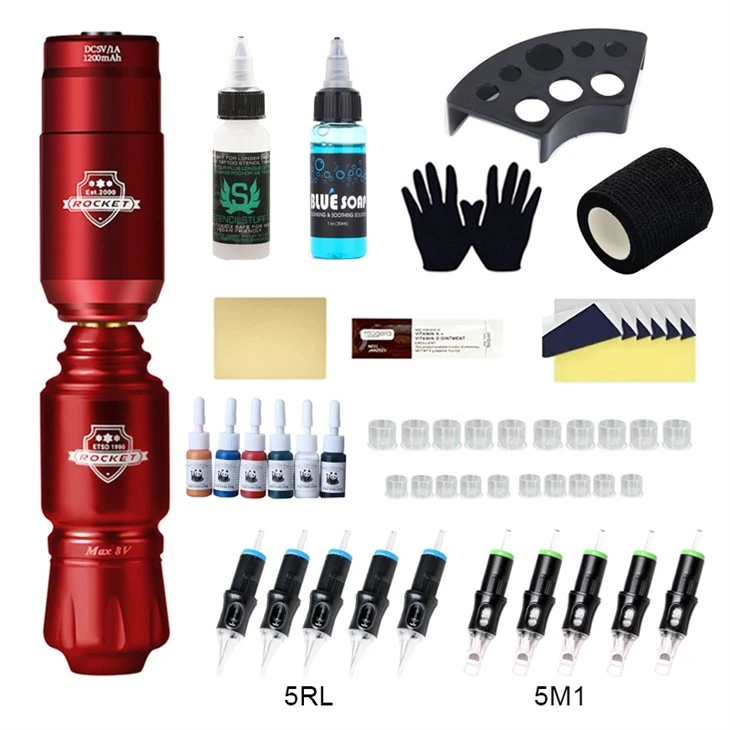
Open the kit and check each component carefully. The Complete Rotary Tattoo Machine Kit usually includes a tattoo machine, needles, ink cups, power supply, foot pedal, and other accessories. Look for any visible defects on the machine, such as scratches, dents, or loose parts. The needles should be sharp, clean, and properly sterilized. Check the ink cups for cracks or irregularities, and ensure that the power supply and foot pedal are in good condition with no frayed wires or broken connectors.
Motor Performance Testing
The motor is the heart of a Rotary Tattoo Machine. For Coreless Precision Motor Rotary Tattoo Kits, the performance of the coreless precision motor is particularly important. Connect the tattoo machine to a suitable power supply and turn it on. Listen to the motor's sound. A high - quality motor should run smoothly and quietly. Any unusual noises, such as grinding, rattling, or high - pitched screeching, may indicate a problem with the motor bearings, internal components, or an imbalance.
Use a tachometer to measure the motor's speed. The speed should be consistent and adjustable within the specified range. Most Rotary Tattoo Machines have a speed range that can be adjusted according to the tattooing requirements. Test the speed adjustment function by gradually increasing and decreasing the speed using the control on the power supply or the machine itself. The speed change should be smooth and responsive.
Another important aspect of motor performance is torque. Torque refers to the rotational force of the motor. To test the torque, attach a needle to the machine and gently press it against a piece of practice skin or a rubber pad. The machine should be able to penetrate the surface evenly without stalling or losing power. A strong and consistent torque is essential for creating clean and precise tattoo lines.
Needle Penetration and Ink Flow Testing
The ability of the tattoo machine to penetrate the skin and deliver ink properly is a key factor in its performance. Use a piece of synthetic practice skin or a specialized tattoo practice pad for this test. Load a needle into the machine and fill an ink cup with a small amount of test ink.
Start the machine and make a few test lines on the practice skin. Observe the needle penetration depth. The needle should penetrate the skin to an appropriate depth, neither too shallow that the ink doesn't stay in the skin nor too deep that it causes excessive damage. The lines should be clean, straight, and of consistent thickness.
Check the ink flow. The ink should flow smoothly from the needle onto the skin. There should be no clogging or uneven ink distribution. If the ink flow is interrupted or inconsistent, it could be due to a blocked needle, improper needle installation, or a problem with the machine's ink delivery system. Try different needle sizes and gauges to ensure that the machine performs well with various types of needles.

Ergonomics and Comfort Testing
Tattoo artists spend long hours using tattoo machines, so the ergonomics and comfort of the Rotary Tattoo Kit are important considerations. Hold the tattoo machine in your hand and simulate the motion of tattooing. Pay attention to the weight and balance of the machine. A well - designed machine should feel comfortable to hold and easy to maneuver. It should not cause excessive fatigue or strain on the hand and wrist during extended use.
Check the grip of the machine. The surface should provide a secure and non - slip grip, even when the hand is wet with ink or sweat. Some machines come with adjustable grips or interchangeable parts to suit different hand sizes and preferences. Test these features to ensure that they work effectively.
Safety Testing
Safety is of utmost importance in the tattooing process. First, check the electrical safety of the power supply and the machine. Use a multimeter to test the voltage and current output of the power supply. The output should be within the specified range and stable. Inspect the insulation of the wires and connectors to ensure that there is no risk of electrical shock.
The needles used in the tattoo kit should be properly sterilized. Check the sterilization indicators on the needle packaging to ensure that they have been processed correctly. If possible, verify the sterilization process with the manufacturer or supplier.
In addition, the machine should have appropriate safety features, such as a grounding wire or a short - circuit protection device. Test these safety features to ensure that they work as intended.
Durability and Long - Term Performance Testing
To assess the durability of the Rotary Tattoo Kit, perform a long - term performance test. Run the machine continuously for several hours or even days, if possible, while periodically checking its performance. This will help identify any potential issues that may arise over time, such as motor overheating, component wear, or loose connections.
After the long - term test, repeat the previous tests, including the motor performance, needle penetration, and ink flow tests. Compare the results with the initial tests to see if there are any significant changes in the machine's performance. If the machine shows signs of deterioration or reduced performance, it may need further improvement or adjustment.
Conclusion
Testing a new Rotary Tattoo Kit is a multi - step process that involves a detailed inspection, functional testing, and long - term performance assessment. By following these testing procedures, we can ensure that the kits we supply meet the highest standards of quality, performance, and safety.
If you are a professional tattoo artist or a business looking to purchase high - quality Rotary Tattoo Kits, we invite you to contact us for more information and to discuss your specific requirements. We are committed to providing the best products and services to our customers.
References
- Professional Tattooing: An Artist's Guide by Christopher S. Beddow
- The Complete Book of Tattooing by Klaus Voormann