

Hey there, fellow tattoo enthusiasts! As a long - time supplier of Tattoo Power, I've seen firsthand how crucial the right power source is for creating amazing tattoos. Today, I'm gonna dive deep into how Tattoo Power affects the ink of a tattoo.
Let's start with the basics. Tattoo Power is essentially the electrical energy that powers your tattoo machine. It determines how the needles move, how deeply they penetrate the skin, and ultimately, how the ink is deposited. Different types of Tattoo Power supplies can have a huge impact on the final look of the tattoo.
First up, we've got the Wireless Tattoo Power Supply. This bad boy offers a lot of freedom for tattoo artists. You're not tied down by cords, which means you can move around more easily and get into those tricky angles. But how does it affect the ink? Well, the wireless design usually means a more consistent power output. There are no cords getting in the way or causing interference, so the needles can move smoothly. This smooth movement leads to more even ink distribution. When the needles move evenly, the ink is deposited more uniformly into the skin, resulting in a cleaner, more professional - looking tattoo. You won't have those blotchy areas where the ink is too thick or too thin.
On the other hand, if the power output from a wireless supply isn't stable, it can cause problems. For example, if the power suddenly drops, the needles might not penetrate the skin deeply enough, and the ink won't take properly. This can lead to a faded or patchy tattoo. That's why it's super important to choose a high - quality wireless power supply.
Now, let's talk about the Led Digital Tattoo Power Supply. These power supplies are great because they give you precise control over the power output. The LED digital display shows you exactly how much power you're using, so you can adjust it according to the type of tattoo you're doing.
For detailed line work, you might want to use a lower power setting. When the power is low, the needles make smaller, more precise movements. This allows you to create fine, detailed lines with the ink. The ink is deposited in a very controlled manner, which is perfect for things like lettering or intricate designs.
For shading, you can crank up the power a bit. A higher power setting makes the needles move faster and penetrate the skin more deeply. This helps the ink spread out and blend together, creating smooth, rich shades. However, if you go too high with the power, you can over - penetrate the skin, which can cause the ink to spread outside of the intended area and result in a messy tattoo. So, with an LED digital power supply, it's all about finding that sweet spot.
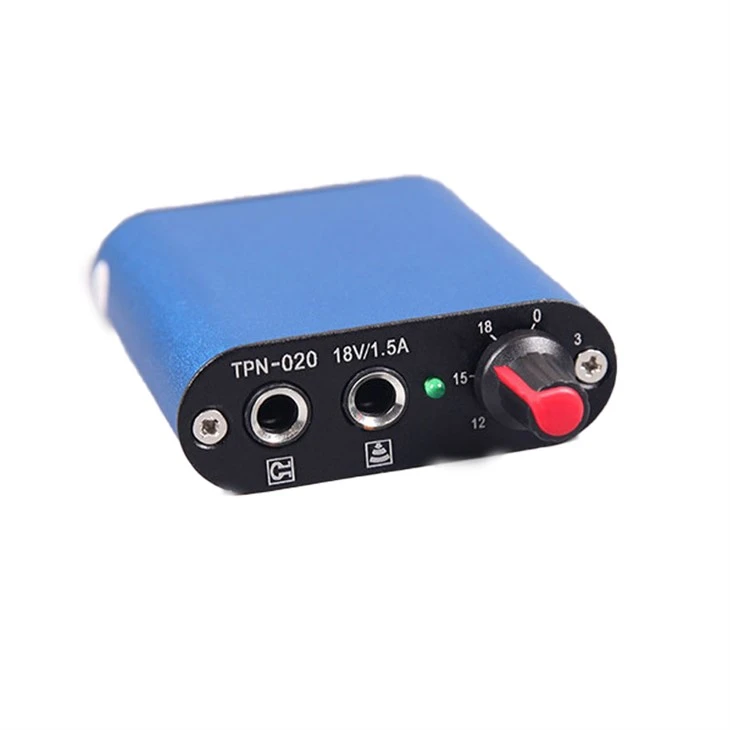
Then there's the Mini Tattoo Power Supply. These are compact and lightweight, making them ideal for artists on the go. They're also great for smaller tattoos or touch - ups.
The small size of a mini power supply doesn't necessarily mean it has less power. But because of its compact design, it might have a slightly different power delivery compared to larger models. The power output might be more concentrated, which can be both a blessing and a curse.
On one hand, the concentrated power can make the needles more efficient at depositing ink. You can get a lot of ink into the skin quickly, which is great for filling in large areas. On the other hand, it can be a bit harder to control. If you're not careful, you might end up with too much ink in one spot, creating a dark, uneven area.
Another factor to consider is the voltage and current of the Tattoo Power. Voltage determines how fast the needles move, while current affects the force with which the needles penetrate the skin. A higher voltage means the needles will move faster, which can be good for covering large areas quickly. But if the current is too high at the same time, it can cause excessive trauma to the skin and make the ink look blotchy.
A lower voltage and current combination is better for more delicate work. It allows for more precise control over the ink deposition. You can create smooth gradients and fine details without causing too much damage to the skin.
The quality of the Tattoo Power also affects the longevity of the ink. A good power supply ensures that the ink is deposited at the right depth in the skin. If the ink is deposited too shallowly, it will fade more quickly over time. If it's deposited too deeply, it can cause scarring and also affect the appearance of the tattoo.
When you use a reliable Tattoo Power supply, the ink is more likely to stay vibrant and look great for years to come. You'll avoid those situations where the tattoo starts to look faded or distorted after just a few months.
Now, I know some of you might be thinking, "Okay, this all sounds great, but how do I choose the right Tattoo Power for my needs?" Well, it depends on your style of tattooing. If you're a beginner, you might want to start with a simple, easy - to - use power supply like a mini one. As you gain more experience, you can invest in a more advanced LED digital or wireless power supply.
If you're doing a lot of large - scale tattoos, a wireless or high - power LED digital supply might be the way to go. They offer the flexibility and control you need for big projects. For smaller, more detailed work, a mini or low - power LED digital supply can give you the precision you require.
I've been in the Tattoo Power supply business for a long time, and I can tell you that having the right power source makes all the difference. It's not just about getting the job done; it's about creating beautiful, long - lasting tattoos.
If you're interested in learning more about our Tattoo Power supplies or want to start a purchase negotiation, don't hesitate to reach out. We've got a wide range of products to suit every artist's needs, and we're always happy to help you find the perfect fit for your tattooing style.

References
- Tattooing: History, Techniques, and Artistry. [Author's name], [Year of publication]
- The Science of Tattooing: Ink, Needles, and Power Sources. [Author's name], [Year of publication]